

Facebook Was Soon to Be Held to Account: Will Meta Escape the Consequences?

In 2004, Mark Zuckerberg built an app to connect Harvard undergrads to one another. By 2006, it was available to anyone over the age of 13. Soon thereafter, his Facebook (FB) social media firm was animated by the concept that connectivity was a human right for the world’s billions. FB is now visited by almost 3 billion distinct users each month. The firm has become a monopoly, counting Instagram and WhatsApp among its divisions. (Further details appear in Chapters 11 and 17 of Digital Dreams Have Become Nightmares: What We Must Do.) 

FB’s dominance has led to serious problems which are well known. Its news feed widely shares toxic material — misinformation, hate speech, and fake news. People post private information which FB exploits commercially through surveillance capitalism. Fake social media participants constructed by Russia in the 2016 US presidential election and other elections has skewed the results. Children’s addiction to social media harms their sense of self-worth and their physical and mental health and well-being.

Read More »
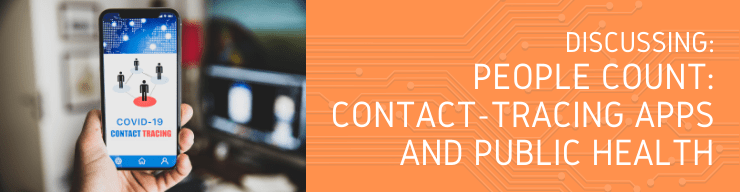

A Review of: ‘People Count: Contact-Tracing Apps and Public Health’

Cybersecurity expert Prof. Susan Landau’s valuable and insightful recent book, People Count: Contact-Tracing Apps and Public Health, stresses that trust in government is essential to making contact tracing work for everyone. 

Contact tracing is a process for identifying, informing, and monitoring people who might have come into contact with a person who has been diagnosed with an infectious disease such as COVID-19.  It starts with a positive test. Public health officials then need to know who that person might have inadvertently infected. This requires tracking down anyone that person had contacted (was “close enough” for “long enough”) recently (14 days in the case of COVID). They can then be informed that they might have been infected and take measures to quarantine and monitor for symptoms. For example, restaurants initiate tracing by recording the name and phone number of one person in each party taking a table in the restaurant. 

Read More »

Technology and lifestyle in the COVID 4th wave and beyond

My blog post of May 18 suggested that some of the COVID-forced changes in work will survive past-COVID: “Large companies will shrink their office space footprint. Landlords will suffer economically, spaces will be vacant, and prices will drop. Many employees will work at home far more frequently than they did pre-pandemic. Many employees will no longer have a permanent desk; rather, they will grab a free desk when they are in the office. There will be less business travel, with more business conducted via teleconference. Progressive conferences will allow for both on-site and virtual attendance. Reductions in travel by [land and air will help] the environment.” 

Read More »

Senior Care Homes Aren’t Ready for the Second Wave

Contributed by Ron Baecker and Gary Feldman

Ron Baecker is an Emeritus Professor of Computer Science at the University of Toronto and author of Computers and Society: Modern Perspectives (OUP, 2019). Gary Feldman, MD, FAAP, FABMG, is a retired physician who was the Public Health Officer of Ventura County and Riverside County in California for 14 years. They are two of the co-authors of The COVID-19 Solutions Guide.

The COVID-19 Solutions Guide, published in mid-June, described the effects of the first wave of the virus on senior care in North America as follows:

As of early June, over one-third of the known COVID-19 deaths in the U.S. have been to residents and staff living and working in nursing and long-term care homes. As of early May, a shocking 82% of the known virus deaths in Canada have been to those in long-term care. A Canadian Forces report commissioned by the province on Ontario, released in late May, reported numerous incidents of poor infection control, residents being denied food or being fed improperly, residents being treated roughly, and staffing problems. A flurry of lawsuits is expected. In Ontario, a $50 million suit was filed on May 1, 2020, alleging that one of Canada’s largest operators of senior residences and long-term care facilities lacked “proper sanitation protocols and adequate testing to prevent the spread of COVID-19”. In the United States, nursing homes have sought emergency protection from lawsuits alleging improper care.”

Read More »

Can the internet help people live through a pandemic?

Contributed by Ronald Baecker and Judith Langer.

Ron is an an Emeritus Professor of Computer Science at the University of Toronto, co-author of The COVID-19 Solutions Guide and author of Computers and Society: Modern Perspectives (OUP, 2019).

Judith is the Vincent O’Leary Distinguished Professor Emeritus at the University of Albany, State University of New York and co-author of The COVID-19 Solutions Guide.

Read More »

Digital collaboration technologies flourish during COVID-19

For most of human history, dyads and groups were only able to work and play together if they were collocated.  All of this changed in the 19th century, when the first remote collaboration and entertainment technologies — the telegraph, the telephone, and the radio — were developed and widely commercialized.  These were joined in the 20th century by television.  By the middle part of the century, medical images were being transmitted over phone lines; soon thereafter, 2-way television was being used for remote medical consultations.

Read More »