Reinvention: Meaningful Ventures in Later Life

My new book, Reinvention: Meaningful Ventures in Later Life, features the journeys of 30 remarkable and creative individuals. Their stories illuminate the act of reinvention and illustrate the five foundations — meaning, drive, courage, excellence, and identity. 

The search for a job that matters, an avocation with purpose, or meaning in one’s retirement years is at the heart of reinvention. Some people change careers primarily with finances in mind, but most who reinvent themselves seek much more than money.

Read More »

Reinvention: Meaningful Ventures in Later Life

This book is the essential guide to seeking a new direction for your next act!

Life after retirement is envisioned as a time for leisure and joy with grandchildren. Yet many find that this is not enough and seek to reinvent themselves in a compelling new direction. It can also happen sooner, driven by work dissatisfaction, a layoff, illness, or pursuing a long-nurtured dream of a new vocation or avocation.

Read More »

The Internet as a Reverse Panopticon

C. Dianne Martin is Emeritus Professor of Computer Science at George Washington University, and Adjunct Professor in the School of Information, University of North Carolina at Chapel Hill. She has been teaching Computers and Society since 1983.

This article is adapted from one published March, 2013, in the ACM SIGCSE Inroads Magazine. 

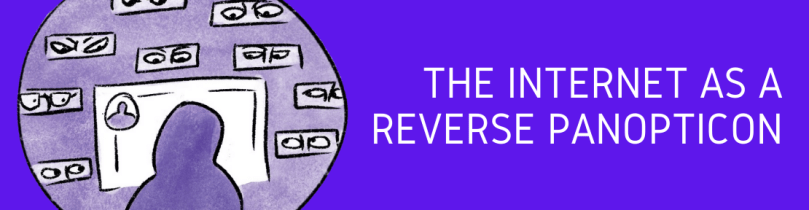
In 1787 Jeremy Bentham, the British Utilitarian philosopher and penal reform theorist, wrote a series of letters in which he proposed a Panopticon (all-seeing), also called The Inspection-House.  His letters put forward “the idea of a new principle of construction applicable to any sort of establishment, in which persons of any description are to be kept under inspection”. For the next 16 years he was obsessed with the desire to implement his model prison design, which he believed would transform penal methods by drastically cutting cost through significant downsizing of the workforce needed to oversee prison populations.  He also felt such prisons would have positive moral value to the prisoners.

Read More »

Electronic contracting and the illusion of consent

Brett Frischmann is the Charles Widger Endowed University Professor in Law, Business and Economics, Villanova University. His most relevant book to his thoughts below is Re-Engineering Humanity (Cambridge University Press 2018).

This post is based on an article that appeared in Scientific American (February, 2019). 

Q: What do you do when you see a little button on a webpage or app screen that says I agree?  
A: Click the button. 

The familiar and incredibly simple click-to-agree mechanism is ubiquitous. We encounter it throughout our digital lives. It is nothing less than the “legal backbone” of the Internet, app stores, e-commerce, and so much more. Yet electronic contracting and the illusion of consent-by-clicking are a sham!  

Read More »

Algorithm and Blues: The Tyranny of the Coming Smart-Tech Utopia. Why optimizing the world for efficiency, productivity and happiness is bad for humanity.

This post is based on an article that appeared in Scientific American (July 2018).

Imagine a world governed by smart technologies engineered to achieve three distinct yet interrelated normative ends: optimized transactional efficiency, resource productivity and human happiness. We could have congestion-free roads—no stop and go, no road rage! Instantaneous, personalized entertainment—no need to search or browse! Successful social interactions—no misunderstanding or missed cues! No surprise ailments, no failures, no missed opportunities! Heck, no surprises of any kind! There are so many imperfections in our world that smart technology could fix.

We do not live in such a world, but the technologies required for it to exist are already being rapidly developed and deployed. Take, for example, the Internet of Things (IoT)—big data, sensors, algorithms, artificial intelligence and various other related technologies. Their promoters make seductive promises. Supposedly, smart phones, grids, cars, homes, clothing and so on will make our lives easier, better, happier.

Read More »